The Most Expensive Missed Detail In 2003
(And How It Can Cost You A Cash Machine)
The Most Expensive Missed Detail In 2003 (And How It Can Cost You A Cash Machine)
In the early 2000s, NASA was launching a series of weather satellites. The purpose of the program was to observe weather phenomena, study volcanic eruptions, and conduct climate research. I’m sure that you already know this, but launching something into space takes a tremendous amount of manpower and money. The last satellite of the series to be launched into space was called the NOAA-19.
During preparations for launch on September 6, 2003, a team of inspectors rotated the craft without checking the bolts that secured it to the platform as required by the standard operating procedures. Suddenly, NOAA-19 crashed to the ground. This definitely ruined someone’s day (if not their career). Take a look at this:
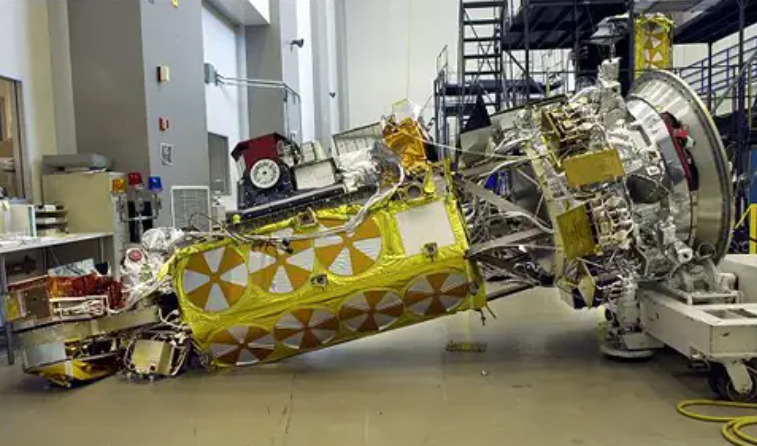
The “Somebody’s Getting Fired” Photo For HR
The subsequent repairs cost $135 million. An investigation concluded that a “lack of procedural discipline” was the cause of the mishap. No kidding. The satellite did get to live its best life, however, and was successfully launched into orbit on February 6, 2009.
Failure To Follow “Best Practices” Can Ruin A Business Acquisition
There is a term in business called “best practices”. It is defined as:
Best Practices: commercial or professional procedures that are accepted or prescribed as being correct or most effective
The idea is that there are very effective policies and procedures that have been discovered over time. Instead of trying to reinvent the wheel when running a business, it makes sense to avoid issues that are already known. The acquisition game is no different.
Even though each business has its own unique set of procedures, the principles of acquiring all businesses are essentially the same (regardless of vertical). Every time I have seen someone try and cut corners before an acquisition, it always costs them down the line. Let’s take a look at how this can happen.
Lack of “Procedural Discipline” Can Cost You $
Entrepreneurs, as a group, are a very optimistic bunch. It takes a leap of faith to bet on yourself and step away from the traditional 9 to 5 grind. This is a strength. However, it can become a weakness when applied to the research portion of buying a business. During the due diligence process, the words “I am sure it is nothing to worry about” are a dangerous mantra. To the best of your ability, you need to know that something is in fact not a problem. No guessing is allowed.
The goal of buying a business is to gain an asset, not inherit unknown problems. What if there is a hidden legal dispute simmering out there? That will not just go away because a business is sold. If you have more assets than the original owner, a sale may ramp up proceedings. All of your hard work will be for naught if legal liens suddenly start popping up everywhere.
Acquisition Aces know that every “i” must be dotted and every “t” crossed for each deal, even if everything ‘looks fine’. A lack of discipline for this best practice will turn a potential cash machine into a due diligence disaster.
Four Speed Bumps In Business Acquisition
The goal of due diligence is to make sure that I do not miss a detail that will result in me inheriting an unseen liability. Now don’t get the wrong idea. Every business has liabilities. The key is to be aware of them so that you can price everything into the deal.
If you can do that, then your cash flow projections become accurate. You are a happy Acquisition Ace and it is time to start searching for the next deal for your portfolio. Make a mistake and you will be cleaning up the mess for a long time.
Here is a quick 5-minute video that will lay out 4 speed bumps to make sure you avoid when acquiring a business: